Reviving History Through AI: Reimagining Museum Learning with the Digital Human Lady Xinzhui
Project Snapshot
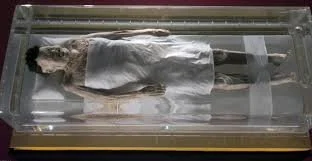
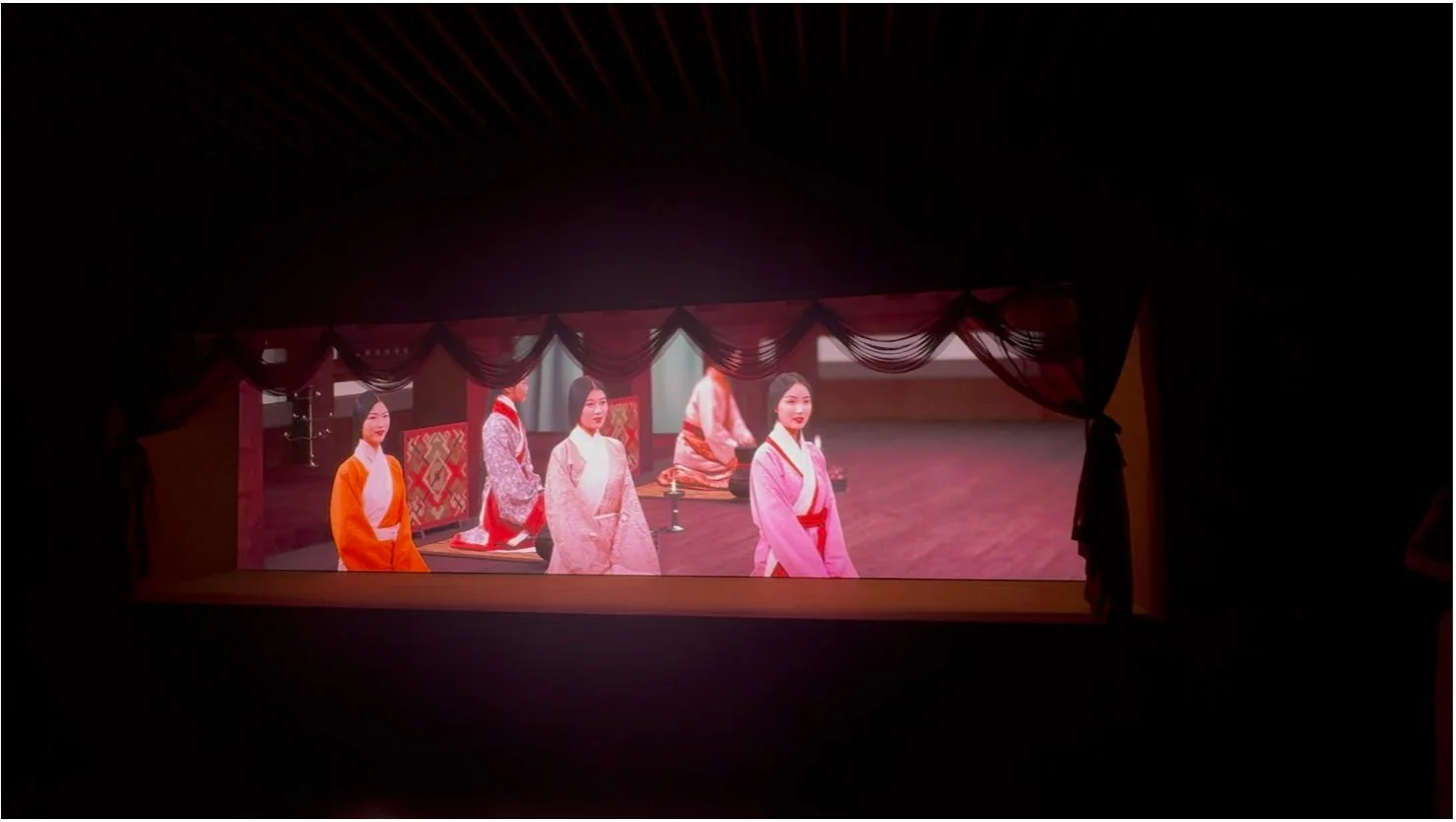
Designed and deployed a real-time, knowledge-grounded conversational agent for museum learning—first as an embodied “digital human” representation of Lady Xinzhui who lived 2500 years ago and whose body is still well-preserved now in the museum and is seen as a symbol of Han Dynasty and culture, later redesigned into a culturally safer proxy after public backlash.
What changed: We learned that in cultural heritage, representation is part of usability: credibility, dignity, and cultural resonance can outweigh interaction fluency.
Outcome: Successfully stabilized deployment through a “soft-landing” redesign (representation + boundaries + tone + rollout strategy) and extended the experience beyond the museum into public spaces.
Context & users
Museum visitors in informal learning settings, where curiosity and meaning-making depend on how accessible and engaging historical knowledge feels.
Outcome
Launched in July 2023 with Hunan Museum and an academic AI lab partner; deployed in the museum and later extended into public spaces (e.g., Changsha subway) to broaden access to cultural learning.
My Role & Scope
Role
Project Lead (learning experience framing + cross-disciplinary delivery)
I served as the bridge between historical scholarship, museum education, AI technology, and public sentiment. My core responsibility was to synthesize these often-competing priorities into a coherent, responsible, and viable experience strategy.
I owned
Initiating and structuring the collaboration with the museum; aligning stakeholders across history/archaeology, AI, and experience delivery
Defining the learning experience model: turning “exhibit explanation” into a dialogue-based inquiry experience
Translating cultural/educational goals into product language: interaction boundaries, tone, and what counts as a “good” visitor conversation
Deployment coordination in public-facing settings, including responding to real-world acceptance risks and iterating accordingly
Deliverables
Experience concept & narrative frame, interaction principles and boundaries, rollout decisions, deployment/iteration notes, and cross-team alignment artifacts.
Not my scope
3D scanning/rendering implementation and low-level model/infrastructure engineering (owned by technical partners).
Create — Idea & Hypothesis
Museums often rely on text labels and linear narration. Visitors “see” artifacts, but rarely sustain inquiry—especially when the distance between modern life and ancient history feels too large.
Core question
What would it mean for a visitor to not only observe history, what if we can bring those renowned figures back to life?
Hypothesis
If we redesign museum learning as dialogue—where visitors can ask, challenge, and reflect—then history becomes more participatory, emotionally resonant, and learnable in the moment. The goal is not entertainment; it is to lower the barrier to inquiry while keeping interpretations grounded in credible sources.
Design — Research & Experience Rationale
This project required designing not only an interface, but a cultural learning relationship.
Design shift
From “static interpretation” → to “inquiry-driven conversation.”
Instead of delivering facts as a lecture, the experience invites visitors to ask questions, surface misconceptions, and build meaning through back-and-forth dialogue.
Derived Design Principle: In cultural heritage interfaces, credibility is a non-negotiable component of usability. The agent must act as a conduit to evidence, not as an autonomous character.
Design — Translating Learning Goals into Product Decisions
To support inquiry while respecting cultural constraints, we made several key product decisions:
Representation as learning interface: the digital human is not just a visual novelty; it is a way to create social presence that encourages questioning and sustained attention.
Conversation boundaries: the agent’s role is to support inquiry and contextual understanding, not to invent or sensationalize.
Tone and pacing: responses should feel inviting, accessible, and dialogic—especially for visitors without background knowledge.
Evidence grounding: when users ask open-ended questions, the system must steer toward evidence-based explanations rather than speculative storytelling.
Iterate — From Prototype to Public Deployment
Challenge:When we first launched the agent as a historical figure, public response quickly became polarized. Some audiences welcomed the concept, while others strongly disagreed with the portrayal, tone, and implications of representing a historical person through an AI interface. The negative discussion escalated quickly.
Insight:We analyzed the feedback and realized: the controversy was not about factual errors, but about perceived dignity, cultural appropriation, and the uncanny valley of historical representation. The public was teaching us that in this context, the medium (a human-like AI) fundamentally conflicted with the message (respectful historical inquiry).
What we did immediately
We took the historical figure offline to stop escalation and reassess representation choices under real public scrutiny.
How we iterated (soft landing strategy)
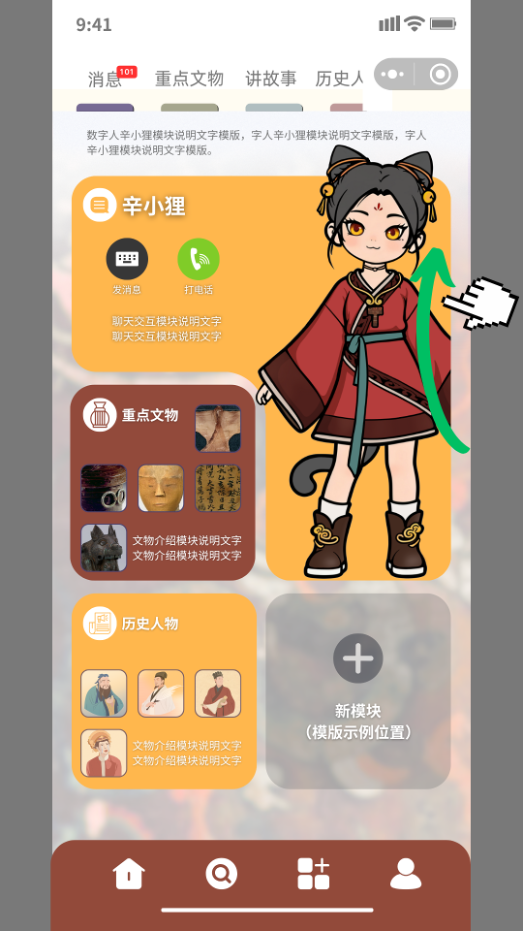
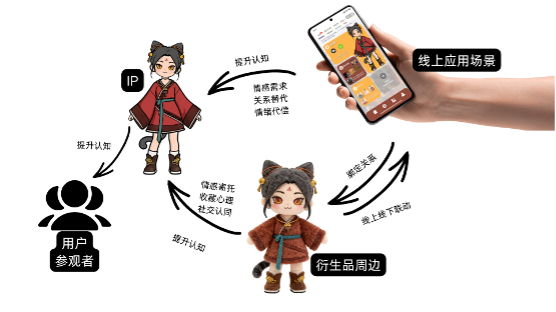
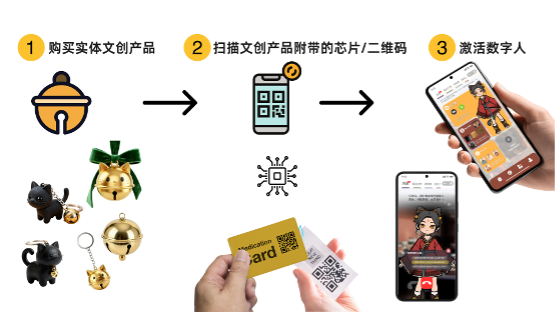
We then soft-launched a lower-stakes substitute: a cartoon AI agent based on her cat—a meaningful character that appears among her relics. By shifting from direct human portrayal to a culturally grounded, gentler proxy, we reduced sensitivity while preserving the learning intent: inquiry-driven dialogue, curiosity, and narrative engagement.
The CAT Avatar integration with souvenir stores in the museum
What changed
Audience acceptance improved noticeably, allowing the experience to stabilize and continue. This episode shaped our approach to cultural technology going forward: responsible deployment sometimes requires a “soft landing” strategy—calibrating representation, tone, and rollout to meet public expectations, not just technical capability.
Decision & Risk Management: How We Decided to Take the Digital Human Offline
Triggers we monitored
Volume & concentration of negative feedback (e.g., complaints, polarized comments, media amplification)
Speed of escalation (how quickly sentiment spread beyond the museum into broader public discourse)
Nature of concerns (not just factual accuracy, but dignity, cultural appropriation, and value conflicts)
Risk assessment dimensions (simple matrix)
Severity: Does it touch cultural/ethical red lines or create reputational harm for the institution?
Velocity: How fast is the narrative spreading and becoming uncontrollable?
Reversibility: Can we mitigate with small changes, or is a full pause required?
Stakeholder impact: Museum leadership, educators, visitors, academic/technical partners, and public-space operators.
Stakeholder alignment
Worked with the museum’s curatorial/education teams to clarify non-negotiables and reputational risks
Coordinated with the AI lab/engineering partners to assess feasible mitigation paths and timelines
Considered on-site operations (frontline staff load, visitor management, incident handling)
For public-space deployment (e.g., subway), assessed compliance/brand risk expectations
Decision & immediate actions
Paused the historical-figure deployment to stop escalation and protect stakeholder trust
Preserved logs/feedback for structured analysis and postmortem learning
Reframed the next iteration as a representation redesign, not merely a “tone tweak”
Trade-offs we explicitly weighed
Learning immersion vs. cultural acceptability and dignity constraints
Continue iterating live vs. pause, redesign, and re-launch safe
Soft-Landing Redesign: Why We Shifted to the Cat Proxy (and How It Still Supported Learning)
Why a “cat” proxy
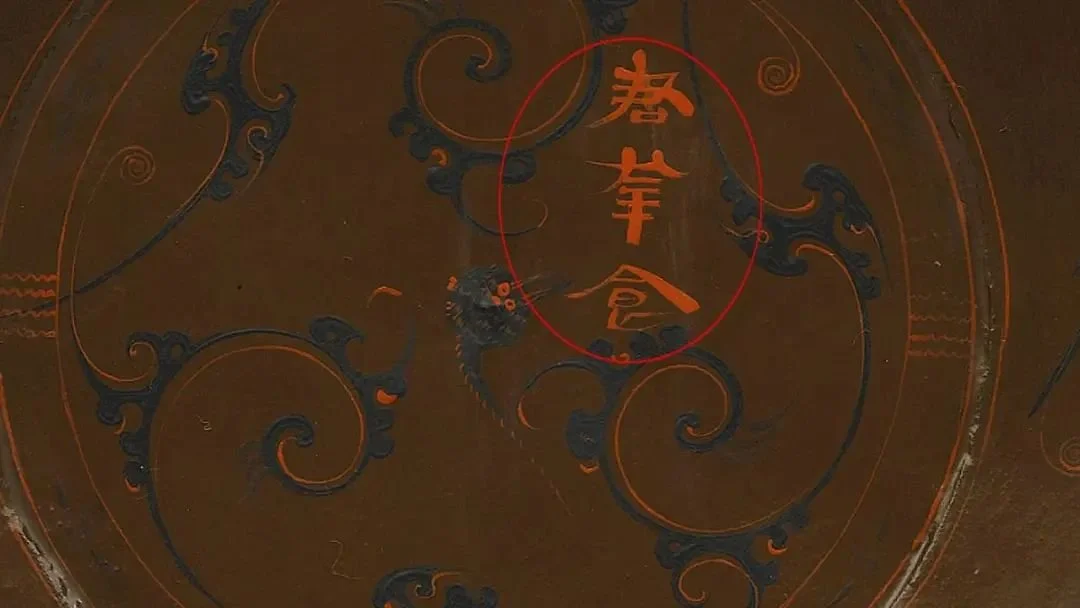
Cultural anchoring: The cat was meaningfully connected to the artifact narrative, not a random mascot
Lower anthropomorphic risk: Shifted from “portraying a historical person” to a symbolic guide
Reduced uncanny-valley discomfort: Avoided hyper-real human likeness in a sensitive heritage context
Clearer role framing: Easier for the public to accept the agent as a learning facilitator, not a “reanimated figure”
The famous cat icon on the plate of Xinzhui’s 2000 years ago The design of cartoon version of her pet THE CAT
How we preserved the inquiry-based learning intent
Kept the core model: dialogue as inquiry (ask → clarify → evidence → reflect)
Shifted from “character performance” to guided questioning and evidence-based explanation
Adjusted tone to be inviting and accessible without sliding into pure entertainment
Key product decisions (what changed)
Role boundaries: The agent became a conduit to sources, not an autonomous storyteller
Evidence grounding: Designed responses to reference exhibits and credible materials; uncertainty was explicitly labeled
Sensitive-topic handling: Added refusal/redirect patterns for identity/dignity/value-judgment prompts
Tone & pacing guide: Reduced “speaking as Lady Xinzhui,” increased “helping visitors reason with evidence”
Rollout strategy
Re-launched via a small-scope soft launch (controlled setting → observe → expand)
Prepared operational support: on-site signage, staff scripts, visitor FAQ (“why this representation”)
Defined monitoring signals: sentiment themes, breakdown points, and engagement proxies
Deployment Lesson — Public Backlash & Soft Landing
This led us to formalize a “Cultural Affordance Filter” for future projects: Before launch, we now explicitly evaluate concepts not just for technical feasibility and learning efficacy, but for their cultural resonance, risk of misinterpretation, and readiness for public discourse.
Impact
Demonstrated a new interaction model for informal learning: “converse with history” rather than “read about history.”
Enabled museum learning to extend beyond institutional walls through deployments in public spaces (e.g., subway), broadening access and visibility for cultural education.
Established a practical lesson for public education systems: cultural acceptability and responsible rollout are design constraints, not afterthoughts.
Reflection
This project was my most intense lesson in design as negotiation. It cemented my belief that the next frontier for learning technology is not smarter algorithms, but more socially intelligent, ethically grounded, and culturally adaptive design frameworks.
Xinzhui Avatar debut in local subway

🛑 Key Takeaway: Crisis Response Decision Matrix
When the digital human sparked public backlash, we used the following structured framework to make the critical decision to pause and redesign:
1. Triggers
Volume & Velocity: Negative sentiment rapidly polarized and spread to mainstream media.
Nature of Concerns: Criticism shifted from factual accuracy to cultural dignity, appropriation, and ethical boundaries.
Risk Level: Issues touched the museum’s core reputation and cultural heritage sensitivities.
2. Risk Assessment Matrix
DimensionQuestionAssessment
Severity-Does this touch cultural/ethical red lines or cause institutional harm?
High - Involves dignity of historical figure and public sentiment.
Velocity-How quickly is the narrative escalating beyond control?
High – Debate spread beyond museum walls into public discourse.
Reversibility-Can we mitigate with small changes, or is a full reset needed?
Low – Representation itself was the problem; incremental tweaks insufficient.
Stakeholder Impact-How are museum leadership, partners, educators, and the public affected?
High – Trust and partnerships at risk; public trust eroded.
3. Decision & Rationale
Action: Immediate pause of the historical figure deployment.
Why: To halt escalation, protect institutional trust, and create space for a principled redesign – not just a cosmetic fix.
🔄 Design Pivot: From Digital Human to Cultural Proxy
We replaced the direct human representation with a culturally grounded “cat” avatar—a meaningful figure from the relics—to preserve learning intent while resolving ethical and public acceptance risks.
Why This Worked:
From Digital Human (Problem) to Cat Proxy(Solution)
Representation Uncanny valley; perceived as “reanimating” a historical person.Symbolic guide; lowers anthropomorphic risk.
Cultural Fit Felt disrespectful or appropriative to some audiences.Anchored in actual artifacts (cat appears on relics).
Role Clarity Blurred line between “character” and “educational tool.”Clearly a learning facilitator, not a historical performance.
Public Acceptance Polarizing and ethically charged.Seen as playful, respectful, and educationally intentional.
How We Preserved the Learning Goal:
Kept Core Interaction: Dialogue-driven inquiry (ask → explore evidence → reflect).
Shifted Narrative Frame: From “speaking as” to “guiding through” historical evidence.
Maintained Rigor: All responses remained grounded in scholarly sources; uncertainty was explicitly acknowledged.
Adjusted Tone: Accessible and inviting, without slipping into entertainment.
Result: A stable, accepted deployment that extended into public spaces (e.g., subway), proving that responsible innovation sometimes requires a softer, smarter entry point.